

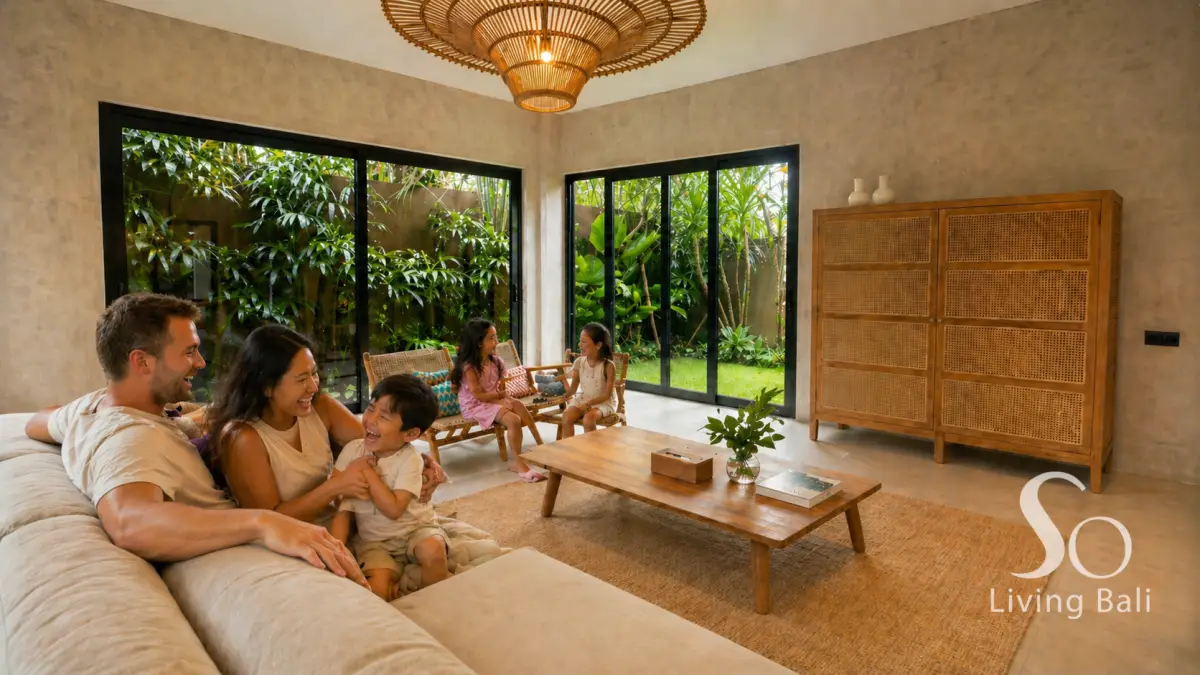
Choosing the best area to live in Bali for families is one of the most important decisions when relocating. Beyond finding the right home, parents need to consider proximity to schools, daily commute, and overall lifestyle. In Bali, location plays a key role in shaping your everyday experience, especially when you have children.
Why Location Matters for Families in Bali
Living in the right area can significantly improve your daily routine. Traffic conditions, road access, and distance to school can turn short trips into long commutes and in Bali, even 5 kilometres can mean 30 minutes on the road during peak hours.
Families searching for where to live in Bali with kids should prioritise areas that offer:
-
Easy access to international schools
-
A safe and family-friendly environment
-
Convenient daily infrastructure (hospitals, groceries, activities)
Choosing the right location helps create a more balanced and stress free lifestyle for every member of the family.
Quick Comparison: Best Areas to Live in Bali for Families
Use this table to compare Bali's top family-friendly areas side by side, across school proximity, lifestyle, traffic, and budget. This is the decision framework most families wish they had before committing to a neighbourhood.
|
Area |
Nearest School |
Commute to School |
Lifestyle Vibe |
Traffic Level |
Est. Rent Range |
Best For |
|
Canggu Beachside |
Canggu Community School, Montessori School Bali |
7-12 min |
Urban, vibrant, expat hub |
Very High (daily congestion) |
$1,800–$5,000/mo |
Young expat families, digital nomads, entrepreneurs |
|
Umalas |
Lycée Français de Bali, ProEd Global School Bali |
4-8 min |
Residential district, strategic location |
Moderate–High |
$1,800–$4,500/mo |
Families wanting balance between Canggu & Seminyak |
|
Seminyak |
Australian Independent School Bali |
8-15 min |
Touristic, mixed, lively |
High |
$1,800–$4,000/mo |
Couples, retirees, empty nesters |
|
Kerobokan |
Sunrise School Bali, Bilingual Community School, Sekolah Lentera Kasih |
10-13 min |
Mixed local-expat residential |
Moderate–High |
$1,500–$3,000/mo |
Practical expat families |
|
Sanur |
Bali Island School, Sekolah Dyatmika, Gandhi Memorial Intercontinental School Bali |
9–20 min |
Calm, established, beachside |
Moderate (predictable) |
$1,800–$3,500/mo |
Retirees, empty nesters, calm-seeking families |
|
Ubud |
Green School Bali, Pelangi School Ubud, British School of Bali |
10–25 min |
Nature, mindful, creative |
Low–Moderate |
$2,000–$4,000/mo |
Nature-focused families |
Note: Rent estimates are indicative for a 3 bedroom villa. Commute times are approximate and may increase significantly during school hours or during the rainy season. The schools listed above focus on primary and secondary education, kindergartens are not included, as they are widely available across all areas in Bali.
Best Areas to Live in Bali for Families
Canggu - A Modern Hub for Expat Families
Canggu is widely known as one of the best places to live in Bali for expat families. It offers modern amenities, a strong international community, and convenient access to schools, cafes, coworking spaces, and healthcare.
Canggu Community School and Montessori School Bali sit within the neighbourhood, making school runs efficient and predictable.
The trade-off: Canggu is Bali's most developed expat corridor, which means traffic during school pickup hours (7-8am and 2-4pm) can be significant. Families who work remotely or have flexible schedules adapt easily and for those on fixed office schedules should factor in commute buffers.
What about North Canggu?
North Canggu (areas further inland like Tumbak Bayuh or Padonan) has become increasingly popular for families looking for better value. Rental prices are typically lower compared to central Canggu, mainly because:
-
it’s further from the beach
-
there are no major international schools within immediate reach
However, for families who don’t need daily beach access or are comfortable with a short commute to school, North Canggu offers:
-
newer villa developments
-
quieter surroundings
-
better space to price ratio
It’s often the “smart compromise” between budget and proximity to Canggu’s ecosystem.
Ideal for: Young expat families, remote workers, those who value a social lifestyle and community events.
Umalas – Strategic Balance Between Canggu and Seminyak
Umalas sits quietly between Canggu and Seminyak, offering a more residential feel while still staying connected to both areas. It has become a popular choice for families who want proximity to Canggu’s schools and lifestyle without fully dealing with its density and traffic.
Lycée Français de Bali and ProEd Global School Bali are located within or very close to the area, making school access efficient for families.
What makes Umalas appealing is its positioning:
-
10–15 minutes to central Canggu
-
10–15 minutes to Seminyak
-
quieter streets compared to both
The trade-off: infrastructure is still developing in some parts, and traffic bottlenecks can occur during peak hours on connecting roads.
For many families, Umalas offer a balanced lifestyle not as busy as Canggu, but not as quiet as Sanur.
Ideal for: Families who want a strategic location, access to multiple areas, and a more residential environment without feeling isolated.
Seminyak - Established Area with Strong Infrastructure
Seminyak is a well known touristic neighbourhood with strong infrastructure, including supermarkets, restaurants, and easy beach access. The area is lively and busy, with a mix of upscale venues and more traditional tourist spots.
While there are no major international schools within the neighbourhood, several options are accessible within a 20-35 minute drive. Good connectivity via Sunset Road makes getting around relatively easy.
Seminyak suits those who value convenience and lifestyle over a quiet residential setting.
Ideal for: Couples, retirees, empty nesters.
Kerobokan – Practical Living with Strong Value
Kerobokan is often overlooked, but for long-term living it offers practical value, especially for families who prioritise space and affordability over lifestyle.
The area sits just inland from Seminyak and Umalas, making it well connected while offering more competitive rental pricing.
Nearby schools include:
-
Sunrise School Bali
-
Bilingual Community School Bali
-
Sekolah Lentera Kasih
Commutes are generally manageable, and road access is more flexible compared to tighter areas like central Canggu.
What to expect in Kerobokan:
-
larger villas at lower price points
-
mixed local-expat residential environment
-
less polished, but more functional daily living
The trade-off: Kerobokan lacks the curated feel of Canggu or the charm of Sanur. It’s not a lifestyle destination, it’s a living focused area. For families who care more about space, budget efficiency, and practicality, this becomes a very rational choice.
Ideal for: Practical expat families, long-term residents, those prioritising value and space over lifestyle aesthetics.
Sanur - A Calm and Family-Friendly Area
Sanur is a well established residential area, often considered the most genuinely family friendly neighbourhood in Bali. It offers quieter streets, a beachfront promenade perfect for cycling, and a strong long-term expat community that has settled here for decades.
Bali Island School is located nearby, and the road network around Sanur is notably more navigable than Canggu or Seminyak. For families prioritising stability and a lower-stress daily routine, Sanur consistently ranks as the top choice.
Ideal for: Families with school aged children, those seeking a quieter long-term base, parents who value walkability and community.
Ubud - A Nature Focused Lifestyle for Families
Ubud attracts families looking for a more mindful and nature oriented lifestyle. Home to Green School Bali, one of Southeast Asia's most distinctive educational institutions. Ubud is a top choice for parents who want their children's education aligned with environmental values.
One important reality: Ubud is geographically removed from the coastal areas. Travel between Ubud and Canggu or Kuta can take 45-90 minutes depending on traffic. Living close to school is not optional here, it's essential. Families who choose Ubud typically commit fully to its slower, village centred pace.
Ideal for: Families drawn to holistic education, nature immersion, yoga and wellness communities, creative and artistic households.
Living Near International Schools in Bali
For most relocating families, school location is the anchor around which everything else is decided. Choosing a home near your preferred school allows for:
-
Shorter daily commutes saving 30-60 minutes per day per child
-
More quality time at home after school activities
-
Better work-life balance for working parents
-
Easier management of after school pickups and schedule changes
-
Reduced fuel costs and vehicle wear in a tropical climate
This is why experienced relocation advisors recommend identifying your school first, then drawing a radius on a map not the other way around.
How to Choose the Best Area for Your Family
When deciding which area is best for families in Bali, work through these four filters in order:
-
School proximity first. Identify your preferred school and map the 15 minute radius. This becomes your search zone.
-
Test the commute at school time. Drive the route on a weekday morning between 7-8am. Bali traffic is a deceptive distance on a map that rarely reflects time on the road.
-
Match lifestyle to area character. Canggu and Sanur serve very different daily rhythms. Be honest about how you actually want to live, not just how you imagine you will.
-
Audit essentials within 10 minutes. Confirm: nearest clinic, supermarket (local or international), pharmacy, and a place your children can be active. Missing even one creates daily friction
Find the Right Home with SO Living Bali
At SO Living Bali, we help families find homes that align with both lifestyle and location, not just properties that look good in photos. Our approach starts with understanding how your family actually lives day to day, then working backwards to identify the right area before we ever show you a listing.
We guide you in:
-
Finding the best area to live in Bali near your preferred international school
-
Matching homes based on your daily routine, not just square footage
-
Understanding Bali's road network and real commute realities before you commit
-
Navigating lease structures, neighbourhood nuances, and expat community fit
Because the right home is not just about the property, it's about how you live every day.
Start Your Family Living Experience in Bali
If you're planning to relocate, start by choosing the right area. From there, finding the right home becomes simple.
Explore family-friendly homes near top schools with SO Living Bali.
solivingbali.com