

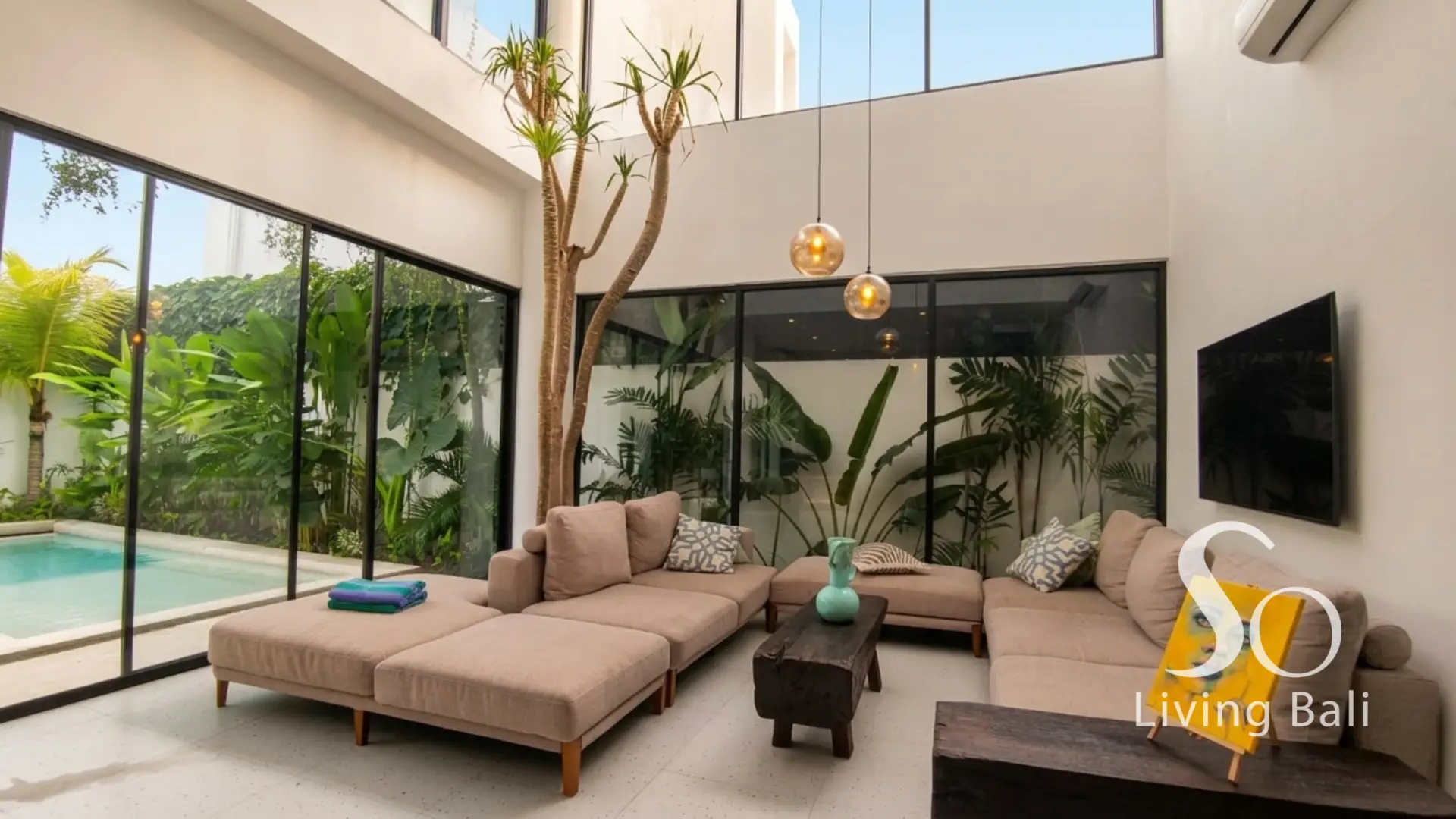
Almost every long-term rental in Bali looks good online. The photos show a pool, a green garden, a wooden kitchen and a bed with white linen. What the photos do not show is what happens in the second month: the pool turning green, the Wi-Fi dropping during a call, the electricity bill arriving at twice what you expected, or the deposit that nobody wrote down. A good long-term rental is defined by what sits behind the photos.
At SO Living Bali, we manage and offer homes for monthly and yearly stays, and we see the same gaps repeatedly. This guide explains what a good long-term rental in Bali actually includes, what is usually left out, and what to ask for in writing before you pay. Prices are converted at roughly IDR 17,900 per US dollar, the rate in early October 2026.
Start with the home itself
The building matters more than the listing price suggests. A villa built in 2022 at USD 2,300 a month regularly outperforms one built in 2016 at USD 3,000, because newer homes have fewer maintenance problems, better wiring and plumbing, and more reliable air conditioning. Market data also shows that new builds under three years old command a 10 to 25 percent premium, which is a fair price for fewer surprises.
Inside the home, check that the basics are complete rather than described as complete. That means working air conditioning in the bedrooms, reliable hot water, a fully equipped kitchen, enough bedding and towels, a comfortable place to work and functioning locks and gates. Furnishings described as complete but missing key items on arrival are among the most common complaints from long-term renters, so ask for a written inventory and compare it with what you find on move-in day.
If you work remotely, a dedicated office room or at least a proper desk and chair matters. Villas with a dedicated workspace tend to rent for roughly 5 to 10 percent more, and many people find that premium worthwhile.
The services that should be included
On a typical monthly lease, a good rental bundles the services that keep a villa running. Based on 2026 market data, that normally means housekeeping once or twice a week, linen and towel changes, pool maintenance, garden maintenance, mains water and, in most cases, Wi-Fi. Property tax is the owner's responsibility.
This matters because the same services cost real money if they are not included. In our guide on the hidden cost of living in Bali, we estimate that pool maintenance runs IDR 400,000 to 1.2 million a month, gardening IDR 300,000 to 800,000 and a housekeeper IDR 1.5 million to 4 million, and that these recurring items together add roughly IDR 3 million to 8 million a month on top of rent. A yearly lease often leaves most of them to the tenant, which is one reason it looks cheaper than it is. Ask exactly which of these are in the rent and who arranges them.
Internet and power: the two things that decide your week
Remote workers should treat internet as a utility to verify, not a promise to accept. Ask which provider is installed, whether it is real fibre, whether the connection is shared with other units, who pays the bill and what speed you should expect. Fibre plans in Bali are inexpensive, with typical home plans around IDR 350,000 to 500,000 a month, so a good rental should have a solid connection and a router that covers the whole villa. Run a speed test in the evening, when networks are busiest, before you sign.
Power cuts in Bali are usually short but not rare. A good rental has a plan for them, such as a UPS on the router so a call does not drop, and for premium villas an inverter and battery system that keeps lights, fans, the router and the fridge running for hours. A UPS costs roughly IDR 2 million to 5 million, an inverter and battery bank IDR 8 million to 15 million. If the villa has neither, factor in the cost or ask the owner to provide it.
The paperwork that protects you
A good long-term rental comes with documents, not only keys. At minimum you should have a signed rental agreement that states the rent, the length, what is included, the notice terms and who pays for repairs. You should also have a signed inventory of everything in the home, and a deposit that is documented in writing, with clear conditions for when it is returned.
Deposits typically run half a month to one month's rent on monthly leases and one to two months on yearly ones, and they are refunded at the end minus documented damage. Problems arise when deposits are held informally, with no paperwork protecting either side, which is a common experience for renters who choose an unmanaged listing. It is also worth confirming that the person renting you the villa has the legal right to do so, and that the property is legally confirmed. A manager who verifies the legal status of each home and inspects it before listing removes much of that risk.
What is usually not included
Even a good rental does not include everything, so know the extras before you budget. Electricity is paid by the tenant and varies enormously: about IDR 1 million to 3 million a month with two air conditioners and a pool, and more with heavy air conditioning in the dry season. Drinking water refills and cooking gas add around IDR 200,000 to 400,000, and a scooter costs IDR 800,000 to 2 million a month. Private staff, such as a cook or a driver, are extra again.
|
Usually included in a good monthly rental |
Usually paid by you on top |
Worth asking in writing |
|
Housekeeping once or twice a week |
Electricity |
Who fixes AC, pumps and plumbing, and how fast |
|
Linen and towel changes |
Drinking water and cooking gas |
Which internet provider and plan is installed |
|
Pool and garden maintenance |
Scooter or car |
What backup exists for power cuts |
|
Mains water |
Extra staff |
Deposit amount and return conditions |
|
Wi-Fi (often) |
Neighbourhood or community fees on some leases |
Notice period and early exit terms |
Judge the price against the value
A lower price is not automatically a better deal. In our guide on what serious long-term living in Bali actually costs, we explain that the honest budget conversation for comfortable long-term living starts at around USD 2,000 to 2,500 a month, and that the true monthly cost usually runs 20 to 25 percent above the headline rent once everything is counted. Location adds more: Canggu and Seminyak carry a 20 to 35 percent premium over comparable homes a few kilometres away, and long leases of six to twelve months typically run 30 to 50 percent below short-term rates.
The most important factor, though, is process. A home that runs reliably, with responsive maintenance, clean documentation and a protected deposit, is worth more than one that photographs beautifully. You look at the photos once. You live in the home every day.
A final checklist before you sign
Before you pay a deposit, confirm that the home is complete against a written inventory, that air conditioning and hot water work, and that the Wi-Fi passes an evening speed test. Confirm which services are included and who pays for the rest, what the backup is for power cuts, and what happens if something breaks on a weekend. Make sure you have a signed agreement, a documented deposit and a clear notice period. If you are new to the island, our 7-day plan for setting up your life in Bali shows how to organise the first week around those checks.
If you are still searching, our guide on how to find a reliable long-term villa in Bali explains how to verify the owner, inspect the villa and pay safely.
Red flags in a rental listing
Some phrases in a listing should make you ask more questions. A rental that says "all included" without a list of what that means, one that does not name the internet provider, one with no mention of who handles repairs, and one that cannot provide a written inventory or a copy of the agreement before payment are all worth pausing on. The same goes for a deposit that is described as informal or paid in cash, and for a price that sits well below comparable homes in the same area. A good rental can answer every one of these questions clearly and in writing.
Frequently asked questions
Is electricity included in a long-term rental in Bali?
Usually not. Electricity is normally paid by the tenant on top of the rent, and it varies widely with air conditioning use, from around IDR 1 million to 3 million a month for a home with two air conditioners and a pool, and more in the dry season. Ask the owner for the average bill from the previous tenant before you decide.
Is Wi-Fi included in a monthly villa rental?
On monthly leases it is usually included, while on yearly leases you often arrange and pay for it yourself, at roughly IDR 333,000 to 1 million a month depending on the provider and speed. Either way, ask which provider is installed and test the speed in the evening before you sign.
How much deposit should I expect to pay?
Typically half a month to one month's rent on a monthly lease and one to two months on a yearly lease. The deposit should be documented in writing and refunded at the end of the stay, minus any documented damage.
A good long-term rental, ready to move in
At SO Living Bali, we built our service around these points. Our homes are verified, legally confirmed, physically inspected and set up for long-term comfort, starting from around USD 2,500 a month, so the questions in this guide are already answered before you arrive. Browse our available homes or contact our team and we will walk you through exactly what is included in each one.